Here is the work of artist Sarah Rosado, who makes surprising creations using cornflakes. From Amy Winehouse to Drake, including Jimmy Hendrix and John Lennon, all these figures are faithfully recreated in an original way!
Showing posts with label Design and Art. Show all posts
Saturday, February 22, 2020
Cornflakes Galore
I've been into the art posts lately; there really is just so much good stuff out there.
Labels:
Design and Art,
Just For Fun
Wednesday, September 9, 2015
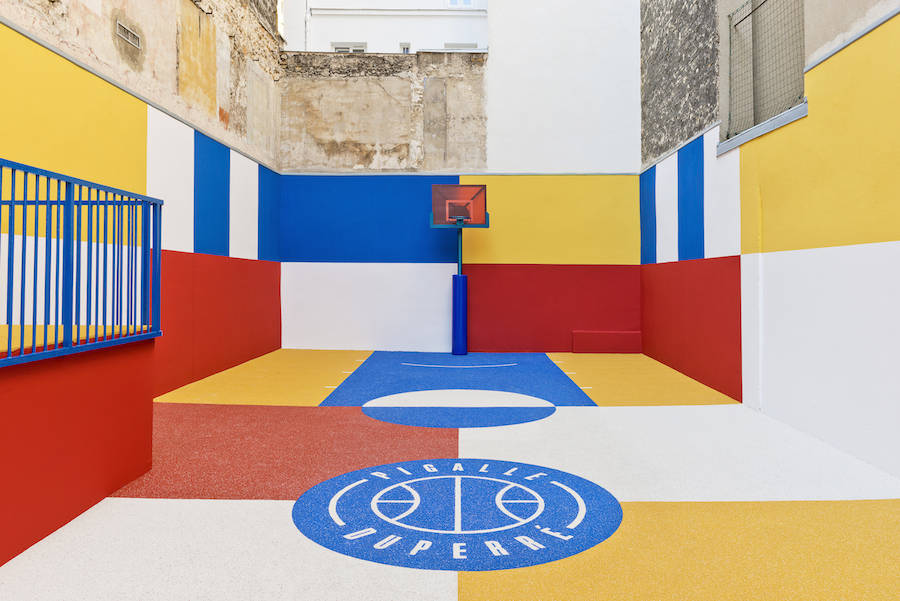
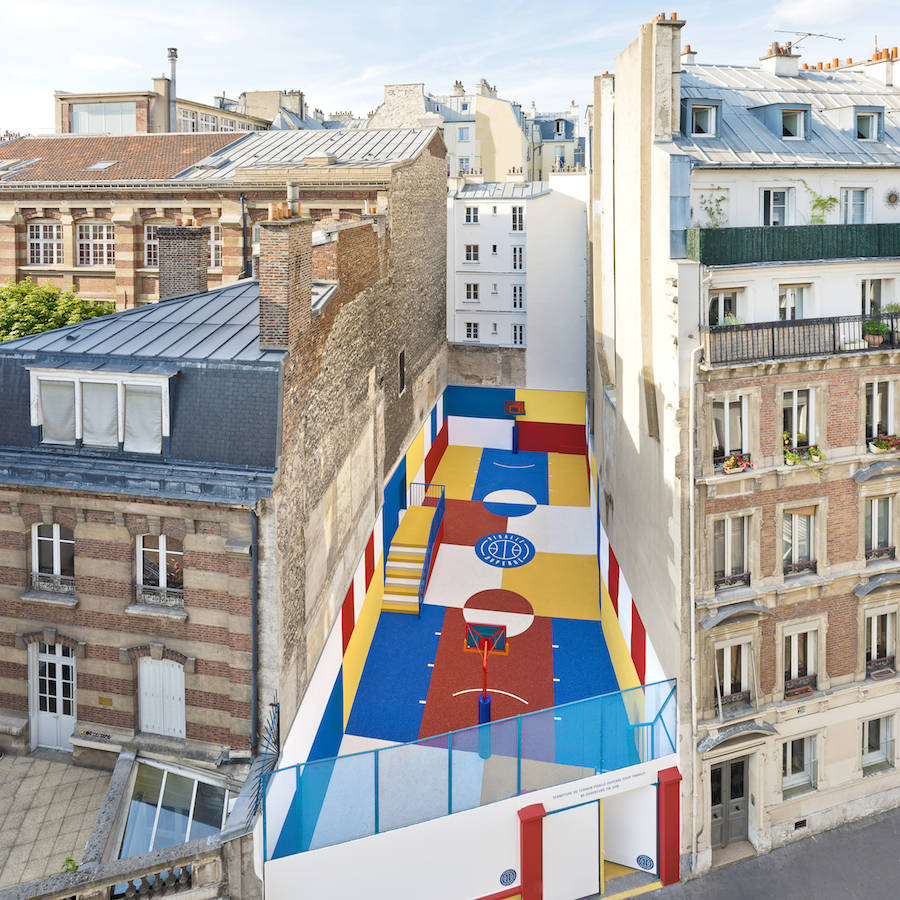
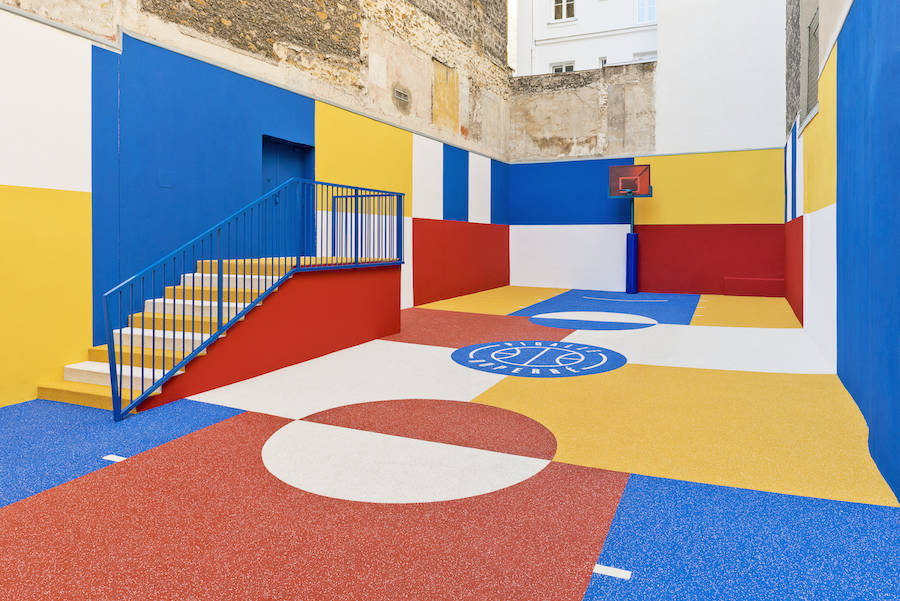
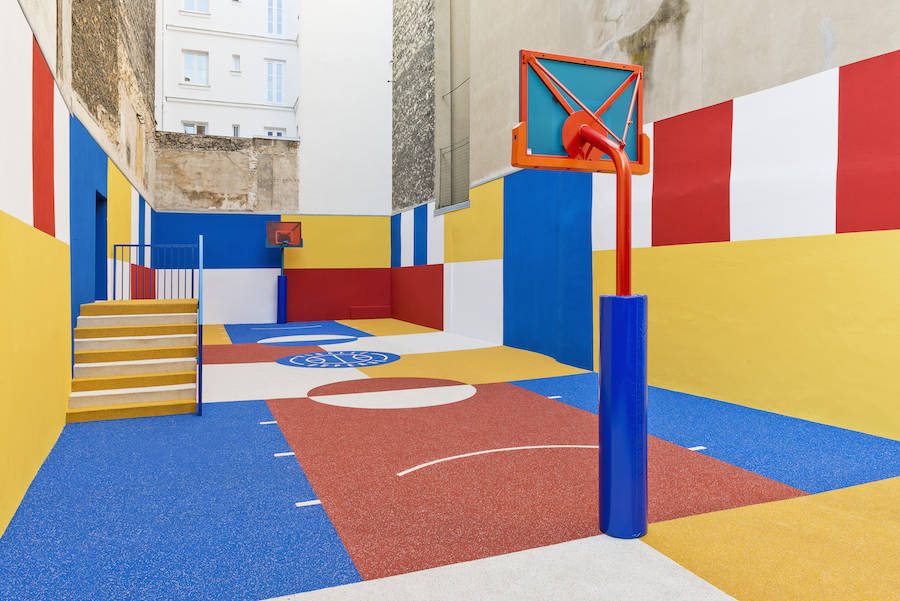
Hoops!
Art and design are often viewed as something purely aesthetic, which I have come to learn is absolutely not the case - so of course, when I come across something that brings together functionality and aesthetics, I have to share.
Vincent Le Thuy (founder of the magazine Sole Collector), brand Pigalle helped by Nike and creative minds working at Ill Studio have recently launched a project of renovation for the basketball court Duperré in Pigalle (Paris). It opened on the 1st July, featuring vivid colors and squares that appear like a breathe in the middle of the two concrete buildings that overhang it. The ground was designed from a “recycled rubber gum that absorbs the ball’s noise” in order to solve the problems of noises that threatened this court to close last year.
Now, do you still believe art and design are solely aesthetic?
Labels:
Design and Art
Wednesday, January 14, 2015
Art With A Bang.
Portugal's VHILS blasts through barriers.
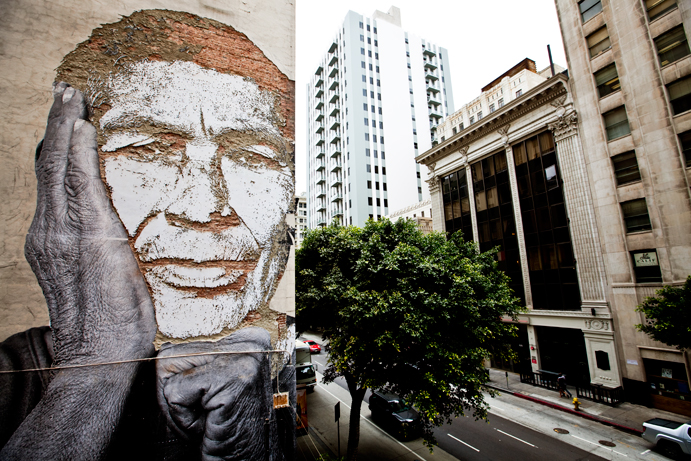
Portuguese artist Alexandre Farto, known by the tag name VHILS from his graffiti days, literally shakes the foundations when he explodes powder charges inserted into stucco facades, or drills and carves into bricks and concrete with power tools.
As dust settles, stunningly lifelike pictures of rugged faces are revealed. Their vivid, deep eyes stare at passersby from walls in Sydney and Shanghai, Moscow and London, Rio de Janeiro and Honolulu, and many places in between.
The 27-year-old's fame has recently outgrown the boundaries of street art, with his first large personal exhibition hitting the museum circuit earlier this year. Just this week he launched a video crafted for the Irish band U2.
The video "Raised by Wolves", filmed in slow motion to capture VHILS's explosive creations in the suburbs of Lisbon where he was born, is part of the Films of Innocence project, "a visionary collection of 11 films by the world’s most vital urban visual artists", according to U2's website.
It was Lisbon and its suburbs, with the decadent charm of dilapidated facades, abandoned warehouses and 1970s revolutionary murals now covered with layers of advertising and graffiti, that inspired VHILS to swap the spray can for carving tools around 2004 and later add explosives to his arsenal.
"I was always interested in those places that expose a bit of the city's fragility, show that everything is ephemeral," VHILS told Reuters in his Lisbon studio, once a garage.
His art is often described as destructive, but he considers it no more destructive than poetry is to a clean sheet of paper.
Many of his more indoor-style works are made of layers of old posters, paint and plaster scraped off walls.
"Digging into those layers, you expose the entrails of the city ... Walls reflected the changes that were happening."
He says the 2010 financial crisis in Portugal and southern Europe, reminiscent of the pre-European Union era, gave him the idea to use explosives: "Sometimes a spark is needed. Explosions show the historic cycle, bring old layers back to the surface."
The technique, which involves powder charges ranging from 0.5 to 2 grams inserted into holes of varying depth drilled in cement and covered with stucco, took a year to develop.
Faces he portrays are of common folk "who just struggle to survive".
"The idea is to make visible those who are practically invisible in the city, humanize public spaces," he said.
Taking his art to a museum meant overcoming a barrier between street art and fine art. But he said "this separation, which is limiting to artists, will disappear... there'll be more dialogue" thanks to the rich visual content available to the new generation via the Internet, even if they are not arts students.
Having staged his first museum exhibition this year at Lisbon's EDP, VHILS is in talks to show his work abroad. But he says "the street is still the biggest museum in the world".
By Andrei Khalip
original article
Portuguese artist Alexandre Farto, known by the tag name VHILS from his graffiti days, literally shakes the foundations when he explodes powder charges inserted into stucco facades, or drills and carves into bricks and concrete with power tools.
As dust settles, stunningly lifelike pictures of rugged faces are revealed. Their vivid, deep eyes stare at passersby from walls in Sydney and Shanghai, Moscow and London, Rio de Janeiro and Honolulu, and many places in between.
The 27-year-old's fame has recently outgrown the boundaries of street art, with his first large personal exhibition hitting the museum circuit earlier this year. Just this week he launched a video crafted for the Irish band U2.
The video "Raised by Wolves", filmed in slow motion to capture VHILS's explosive creations in the suburbs of Lisbon where he was born, is part of the Films of Innocence project, "a visionary collection of 11 films by the world’s most vital urban visual artists", according to U2's website.
It was Lisbon and its suburbs, with the decadent charm of dilapidated facades, abandoned warehouses and 1970s revolutionary murals now covered with layers of advertising and graffiti, that inspired VHILS to swap the spray can for carving tools around 2004 and later add explosives to his arsenal.
"I was always interested in those places that expose a bit of the city's fragility, show that everything is ephemeral," VHILS told Reuters in his Lisbon studio, once a garage.
His art is often described as destructive, but he considers it no more destructive than poetry is to a clean sheet of paper.
Many of his more indoor-style works are made of layers of old posters, paint and plaster scraped off walls.
"Digging into those layers, you expose the entrails of the city ... Walls reflected the changes that were happening."
He says the 2010 financial crisis in Portugal and southern Europe, reminiscent of the pre-European Union era, gave him the idea to use explosives: "Sometimes a spark is needed. Explosions show the historic cycle, bring old layers back to the surface."
The technique, which involves powder charges ranging from 0.5 to 2 grams inserted into holes of varying depth drilled in cement and covered with stucco, took a year to develop.
Faces he portrays are of common folk "who just struggle to survive".
"The idea is to make visible those who are practically invisible in the city, humanize public spaces," he said.
Taking his art to a museum meant overcoming a barrier between street art and fine art. But he said "this separation, which is limiting to artists, will disappear... there'll be more dialogue" thanks to the rich visual content available to the new generation via the Internet, even if they are not arts students.
Having staged his first museum exhibition this year at Lisbon's EDP, VHILS is in talks to show his work abroad. But he says "the street is still the biggest museum in the world".
original article
Labels:
Design and Art
Friday, October 3, 2014
Street Art
Street art is, by definition, an urban phenomenon — it’s called “street art,” after all, not “dirt road art.”
But a group of renowned street artists whose murals adorn buildings in cities around the world have embarked on an endeavor evocative of the Land Art movement.
For example:
Painted Desert Project
The Project was spearheaded by Chip Thomas, Artist, who came across a Stretch of Highway in northern Arizona, the Painted Desert, and decided to get to work....
He pasted a few of his own large-scale images onto the sides of buildings, and before he knew it other artists began adding their own pieces. Now the project has become a little more organized, and artists are being invited out to work on new large-scale pieces in the desert.
The list of artists signed up to participate — or who have already completed their murals — is a veritable who’s who of the street art scene, including the likes of Gaia, Chris Stain, Labrona, Overunder, Doodles, Yote, and more. Their often intricate and colorful works make for surreal juxtapositions with the pristine surrounding landscape.
The only other comparable project, appropriately enough, is at the other end of Arizona.
The Boneyard Project
The Boneyard near Tuscon features a fleet of abandoned aircraft that have been painted by a similarly eclectic set of artists. Its roster of participants includes the likes of Dan Colen, Kenny Scharf, and Ron English, making it a decidedly less DIY and community-driven endeavor than the Painted Desert Project. You can follow its progress on Chip Thomas’s blog.
For the original article, please visit Bluon Artinfo.
But a group of renowned street artists whose murals adorn buildings in cities around the world have embarked on an endeavor evocative of the Land Art movement.
For example:
Painted Desert Project
The Project was spearheaded by Chip Thomas, Artist, who came across a Stretch of Highway in northern Arizona, the Painted Desert, and decided to get to work....
He pasted a few of his own large-scale images onto the sides of buildings, and before he knew it other artists began adding their own pieces. Now the project has become a little more organized, and artists are being invited out to work on new large-scale pieces in the desert.
The list of artists signed up to participate — or who have already completed their murals — is a veritable who’s who of the street art scene, including the likes of Gaia, Chris Stain, Labrona, Overunder, Doodles, Yote, and more. Their often intricate and colorful works make for surreal juxtapositions with the pristine surrounding landscape.
The only other comparable project, appropriately enough, is at the other end of Arizona.
The Boneyard Project
The Boneyard near Tuscon features a fleet of abandoned aircraft that have been painted by a similarly eclectic set of artists. Its roster of participants includes the likes of Dan Colen, Kenny Scharf, and Ron English, making it a decidedly less DIY and community-driven endeavor than the Painted Desert Project. You can follow its progress on Chip Thomas’s blog.
For the original article, please visit Bluon Artinfo.
Labels:
Design and Art
Saturday, September 27, 2014
The Skill of Describing Art
Describing something for others to be able visualize without looking at it is in itself an art.
Let's watch this video together for tips on how to describe art.

Let's watch this video together for tips on how to describe art.
Labels:
Design and Art,
Video level B-1 B2
Thursday, July 10, 2014
Can you vandalize vandalized works?
Labels:
Design and Art,
Just For Fun
Friday, December 20, 2013
Unbelievable 3D drawings
Labels:
Design and Art,
Just For Fun
Tuesday, October 29, 2013
Swiss Artist Bio
Thomas Hirschhorn is a Swiss artist who is known for
his sprawling works that transform traditional white cube spaces into
environments taking on issues of critical theory, global politics, and
consumerism. He engages the viewer through superabundance.
Combining found imagery and texts, bound up in low-tech constructions of
cardboard, foil, and packing tape, he props imagistic assaults in a DIY-fashion
that correlates to the intellectual scavenging and sensory overload designed to
simulate our own process of grappling with the excess of information in daily life. Created from the most basic
everyday materials, his major works are concerned with issues of justice, injustice, power and powerlessness, and moral
responsibility.... Read More
Thomas Hirschhorn studied from 1978 – 1983 at the University of Art in Zurich, Switzerland. His work has been the subject of numerous solo exhibitions including the Institute of Contemporary Art, Boston; Centre Georges Pompidou, Paris; Museu d'Art Contemporani, Barcelona; Kunsthaus Zürich; Art Institute of Chicago; and Museum Ludwig, Cologne; and Secession, Vienna. Additionally, he has taken part in many international group exhibitions, including Documenta 11 in Kassel, Germany, where his large-scale public work, Bataille Monument was on view; “Heart of Darkness” at the Walker Art Center; and “Life on Mars: the 55th Carnegie International.”
Hirschhorn was the recipient of the Prix
Marcel Duchamp in 2000 and the Joseph Beuys-Preis in 2004 and represented the
Swiss Pavillon in the 54th Venice Biennial in 2011.
Watch Cavemanman(2 min) you tube video: Click here
Listen to an interview with Thomas Hirschhorn: click here
Labels:
Design and Art,
Video B2-C1
Tuesday, October 22, 2013
Write your own Artist Bio
A biography is a quick yet important summary of your CV. It belongs in your portfolio. It will change and transform as you change and transform. It is a summary of how you
got to where you are in life. It is written in prose and in the third person (like a
novel or story). Basically you are
writing about yourself using the ‘he’ or ‘she’ form. The Artist’s Bio may also
say something about key themes to your ‘inner artist’.
It is one to two paragraphs and is usually
around one half of a page. The bio (also known as biog) gives information such
as where you went to school, what degrees/education you have, if you've led or
participated in any workshops, major exhibitions where your artwork has been
exhibited and any major collections that your work is a part of.
Sample Artist Bio CLICK HERE
Key information in an artist’s biography:
· Your name & where you are from
· When you were born
· What you are creating; the medium that you work in(or are interested
in)
· A sentence about the
key themes, concerns of your practice
· Your background in this medium (schooling, past
projects, shows, awards…)
· Your education
(include art related education)
· What you are working on currently (themes,
projects, ideas…)
· Other interesting
information relevant to your practice or career as an artist (e.g.
collaborations or arts collectives, aspects of your career that inform your
practice)
·
Where you live, work, or
study now/
upcoming exhibitions, residencies or study plans
· Written in the 3rd person (he, she form)
· Keep it short and
simple
· Cool picture or formal picture
Depending on where the
bio is being displayed you could be as formal or casual as you want. What is
most important is that you are accurately represented!
An Artist’s Bio is as individual as you are.
To begin, write a
list/outline to plan what is important to mention.
Labels:
Design and Art
Monday, August 19, 2013
A personal self description essay
Learning how to write an essay can be a frustrating process, but it doesn't have to be. If you understand what to do it will be easier. Here is a ten-step process that help you write an essay.
1.Research: Begin the essay writing process by researching yourself, making yourself an expert on you. Your name, how you have grown up, what you like and don’t like, what your expectations are and all that. ‘About Me’ handout.
2. Analysis: Now that you have a good knowledge base, start analyzing yourself. Clearly define yourself. What are your strengths and weaknesses?
3. Brainstorming: Your essay will require insight of your own personal self. Ask yourself 12 questions and answer them. Meditate with a pen in your hand. Take walks & think & think until you come up with original insights/things to write about. Draw, sketch, sing, think. Who am I - what do I want?
4. Thesis: Pick your best ideas and pin them down so that you can write your entire essay around these ideas. Your thesis is your main point, summed up in a concise sentence that lets the reader know where you're going, and why.
5. Outline: Sketch out your essay before straightway writing it out. Use one-line sentences to describe paragraphs, and bullet points to describe what each paragraph will contain. Play with the essay's order. Map out the structure of your argument, and make sure each paragraph is unified. Begin with the ‘About Me’ assignment!
6. Introduction: Now sit down and write the essay. The introduction should grab the reader's attention. Your intro is merely a buildup of the issue, a stage of bringing your reader into the writing.
(Note: The title & 1st paragraph are probably the most important elements in your essay. This is an essay-writing point that doesn't always sink in within the context of the classroom. In the first paragraph you either interest or lose the reader.) In the real world, readers make up their minds about whether or not to read your essay by glancing at the title alone.)
7. Paragraphs: Each individual paragraph should be focused on a single idea. Begin paragraphs with topic sentences, give examples of why/ evidence, and your ideas in the clearest way you can. Speak to your reader as if he or she were sitting in front of you. In other words, instead of writing the essay, try talking the essay.
8. Conclusion: End your critical self description essay by making an ending sentence, and then end on some memorable thought, perhaps a quotation, or an interesting twist of logic, or some important point about you.Is there something you want the reader to walk away with? Let him or her know exactly what.
9. MLA Style: Format your essay according to the correct guidelines for citation. All borrowed ideas & quotations should be correctly cited in the body of your text, followed up with a Works Cited (references) page listing the details of your sources.
10. Language: You're not done writing your essay until you've polished your language: correct the grammar, make sentences flow, adjust the formality, give it a level-headed tone, and make other intuitive edits. Proofread until it reads just how you want it to sound. You don't want to bungle the hours of work you've put into writing your essay by leaving a few sloppy misspellings &badly worded phrases.
Labels:
Design and Art,
Writing B-2
Sunday, April 7, 2013
What is Sculpture?
In order to answer that questions let's begin with the ELEMENTS OF ART
LINE - a continuous mark on a surface
SHAPE - enclosed line COLOR -
HUE/intensity VALUE - Tints and Shades (light/dark)
TEXTURE - Tactile (visual or actual)
SPACE - Foreground, Middle ground, Background
FORM – Visual or Actual
Now Click here to follow this informative presentation:
Labels:
Design and Art
Saturday, March 16, 2013
An Artist's Statement
There are all different kinds of tones you can take in your artist’s statement. Here’s an example of the “why I make what I make” statement. It provides background that feeds the reader’s imagination. Ideal reader: someone who’s seen the work, and wants permission to understand it, love it. Who wrote it? Alfred Steiner “I spent my elementary school years in rural Ohio, in a big pile of animal parts. My best friend’s dad had a VCR with only three VHS tapes, one of which was The Texas Chainsaw Massacre. It was my favorite, and not just because the fictional events took place on the day I was born. There’s a scene in it where one of the nubile victims stumbles into a room strewn with bones—mostly animal—at once terrifying and rustic in the yellow Texas sun. Not to be outdone, my friend and I discovered a boneyard ourselves while roaming a nearby farm, harvesting a few cow skulls that we cleaned with bleach. There was also this fur dealer who lived in a hovel, just past the creek. In our only encounter, I watched this man enthusiastically carve out the heart of a fox and hand it to me. (I had asked for the organ to use in a third-grade science project.) But even that experience didn’t prepare me to find a severed blue eye staring back at me from the mailbox. Lowering the door of the box, I found the milky, apple-sized sphere suspended in a jar of formaldehyde. Turns out this horse eyeball was a gift from our veterinarian, who had already noticed my peculiar predilection. Pressing my memory for other seminal experiences involving animal entrails, I come up empty. But I do remember my friend telling me that his dad had a fourth videotape. Adult cartoons.”
Labels:
Design and Art,
Writing B-2
Monday, January 14, 2013
Artist Bio - Roman Signer
Boot Fountain in Solothurn
Der Tisch in Appenzell
Born in Appenzell, Switzerland, Signer started his career as an artist later in life at the age of 28, after working as an architect’s draughtsman, a radio engineer apprentice, and a short stint in a pressure cooker factory. He holds degrees from arts institutions in Switzerland and Poland. He studied at the Schule für Gestaltung in Zurich and Lucerne between 1966 and 1971. He studied at the Academy of Fine Arts in Warsaw, Poland from 1971-1972.
Signer's work has grown out of, and has affinities with both land art and performance art, but they are not typically representative of either category.[1] It is often being described as following the tradition of the Swiss engineer-artist, such as Jean Tinguely and Peter Fischli & David Weiss
continue reading HERE
thank you Wikipedia
Labels:
Design and Art,
Just For Fun,
Reading level A-2 B-1
Friday, January 4, 2013
Land Art
What's That?
Land art or Earth art is an art movement which emerged in the United States in the late 1960s and early 1970s, in which landscape and the work of art are linked. It is also an art form that is created in nature, using natural materials such as Soil, Rock, boulders, stones, organic media (logs, branches, leaves, and water with introduced materials such as concrete, metal,
asphalt,
mineral pigments. Sculptures are not placed in the landscape, rather, the
landscape is the means of their creation. Often earth moving equipment is
involved.His purpose is to produce plastic emotions in the spectator who faces a landscape. The fundamental beginning of the Land Art is to alter, with an artistic sense, the landscape, to produce the maximum of effects and sensations to the observer.
It Tries to reflect the relation between the man and the land, the environment and the world, expressing at the same time the pain, for the environmental deterioration of the climate that exists nowadays. The principal thing is the interstirrup-strap of the man - artist with the environment.
-In fact, one of the major distinctions between Land Art and most of the art one sees in the museum is that Land Art is designed to evolve, change, and eventually decay. Some works of art are quite ephemeral, persisting only for a few hours or days, while others are deliberately exposed to erosion and wind so that they become distorted over time.
Labels:
Design and Art,
Just For Fun
Thursday, December 20, 2012
Come watch the "Strand Beest"
Dutch artist Theo Jansen has been working for 16 years to create sculptures that move on their own in eerily lifelike ways. Each generation of his "Strandbeests" is subject to the forces of evolution, with successful forms moving forward into new designs.
Jansen's vision and long-term commitment to his wooden menagerie is as fascinating to observe as the beasts themselves.
His newest creatures walk without assistance on the beaches of Holland, powered by wind, captured by gossamer wings that flap and pump air into old lemonade bottles that in turn power the creatures' many plastic spindly legs. The walking sculptures look alive as they move, each leg articulating in such a way that the body is steady and level. They even incorporate primitive logic gates that are used to reverse the machine's direction if it senses dangerous water or loose sand where it might get stuck.
Watch this incredible kinetic art in action!!
Jansen's vision and long-term commitment to his wooden menagerie is as fascinating to observe as the beasts themselves.
His newest creatures walk without assistance on the beaches of Holland, powered by wind, captured by gossamer wings that flap and pump air into old lemonade bottles that in turn power the creatures' many plastic spindly legs. The walking sculptures look alive as they move, each leg articulating in such a way that the body is steady and level. They even incorporate primitive logic gates that are used to reverse the machine's direction if it senses dangerous water or loose sand where it might get stuck.
Watch this incredible kinetic art in action!!
Tuesday, December 4, 2012
To thoughtfully evaluate a work of art...
...you must determine what your criteria are for judging it. Only you the
artist can provide this information. Do not assume your fellow student , the
viewer, or the teacher shares your point of view. Try to look at it
objectively.
1. Describe the work
·
what does it look like?
·
what is it made of?
·
What are the colors
lines, shapes, texture, & space you see
Assume others (the audience) does not
see the piece and that you alone are there for their understanding of it's
qualities.
2. Interpret the work
·
What does it mean?
·
What do you notice first in this picture?
·
Where is your eye led?
·
Why?
Here you are asked to synthesize any
information you have with your own (subjective) interpretation of the work's meaning/significance.
3. Evaluate the work
·
is it art?
·
is it interesting?
·
does it "work"?
This is, perhaps, the most difficult
critical task, yet it is usually the one to which most people skip when evaluating(criticizing) a work of art. Explain why
you feel the way you do.
Labels:
Design and Art
Monday, November 19, 2012
Land Art
Land art or Earth art is an art movement which
emerged in the United States in the late 1960s and early 1970s, in which
landscape and the work of art are linked. It is also an art form that is created
in nature, using natural materials such as Soil, Rock, boulders, stones, organic
media (logs, branches, leaves, and water with introduced materials such as
concrete, metal,
asphalt,
mineral pigments. Sculptures are not placed in the landscape, rather, the
landscape is the means of their creation. Often earth moving equipment is
involved.
His purpose is to produce plastic emotions in the spectator who faces a landscape. The fundamental beginning of the Land Art is to alter, with an artistic sense, the landscape, to produce the maximum of effects and sensations to the observer.
It Tries to reflect the relation between the man and the land, the environment and the world, expressing at the same time the pain, for the environmental deterioration of the climate that exists nowadays. The principal thing is the interstirrup-strap of the man - artist with the environment.
-In fact, one of the major distinctions between Land Art and most of the art one sees in the museum is that Land Art is designed to evolve, change, and eventually decay. Some works of art are quite ephemeral, persisting only for a few hours or days, while others are deliberately exposed to erosion and wind so that they become distorted over time.
asphalt,
mineral pigments. Sculptures are not placed in the landscape, rather, the
landscape is the means of their creation. Often earth moving equipment is
involved.His purpose is to produce plastic emotions in the spectator who faces a landscape. The fundamental beginning of the Land Art is to alter, with an artistic sense, the landscape, to produce the maximum of effects and sensations to the observer.
It Tries to reflect the relation between the man and the land, the environment and the world, expressing at the same time the pain, for the environmental deterioration of the climate that exists nowadays. The principal thing is the interstirrup-strap of the man - artist with the environment.
-In fact, one of the major distinctions between Land Art and most of the art one sees in the museum is that Land Art is designed to evolve, change, and eventually decay. Some works of art are quite ephemeral, persisting only for a few hours or days, while others are deliberately exposed to erosion and wind so that they become distorted over time.
Labels:
Design and Art
Thursday, November 8, 2012
We Own the Sky
Watch this video. Listen to the words in the song. Waving Hands.
This is filmed and sung in Chur, Switzerland byYassin Mahdi & Hannes Barfuss
The Video is by Damian Caduff & Yassin Mahdi
The puppet is done by Daria Caduff
Well done! I love it!
Click here
This is filmed and sung in Chur, Switzerland byYassin Mahdi & Hannes Barfuss
The Video is by Damian Caduff & Yassin Mahdi
The puppet is done by Daria Caduff
Well done! I love it!
Click here
Labels:
Design and Art,
Just For Fun
Wednesday, November 7, 2012
Art Basel Miami Beach announces 2012 Art Video program
For the second consecutive year, Art Video will present works by some of today's most exciting artists across two venues, inside the Miami Beach Convention Center and in the outdoor setting of SoundScape Park. Organized in association with David Gryn, Director of London's Artprojx, Art Video Nights will showcase 60 film and video works on the 7,000-square-foot outdoor projection wall of the Frank Gehry designed New World Center. Selections drawn from the participating galleries of Art Basel Miami Beach include works by a wide array of artists, both emerging and established, from Latin America, the United States, Asia and beyond.
continue
Labels:
Design and Art
Monday, October 29, 2012
Young and Free Street Artists
Whether you like the hand of Kid Zoom as shown here, or a plethora of other really really good street artists, this is the place to read more.
Click here
Labels:
Design and Art
Subscribe to:
Posts (Atom)